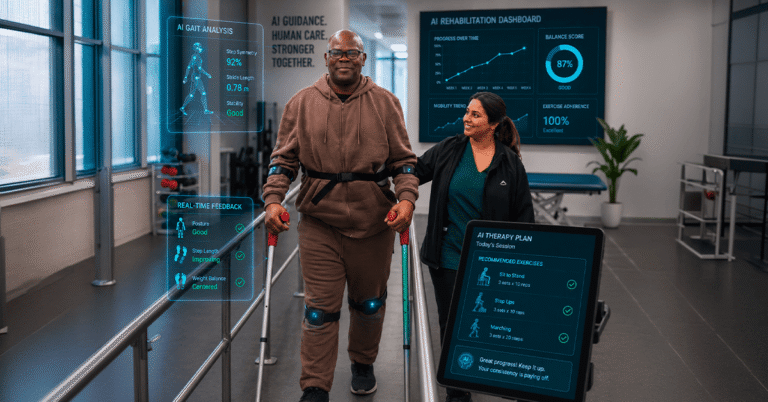

Physiotherapy has traditionally been viewed as a hands-on profession focused on movement, rehabilitation, and recovery. While those foundations remain essential, the industry is rapidly evolving. Artificial Intelligence (AI), wearable sensors, and digital rehabilitation technologies are beginning to reshape how physiotherapists assess, monitor, and guide recovery.
The future of physiotherapy is not about replacing therapists with technology. Instead, it is about combining clinical expertise with smarter tools that improve outcomes, personalise rehabilitation, and help patients recover more effectively.
Why Rehabilitation Is Changing
Healthcare systems globally are facing increasing pressure from:
- Ageing populations
- Rising chronic disease
- Increased falls and frailty
- Longer life expectancy
- Growing demand for rehabilitation services
At the same time, patients are expecting more personalised and measurable healthcare experiences.
Traditionally, physiotherapy relied heavily on observation and clinical judgement. While these remain critical, technology now allows therapists to gather more objective information about how patients move, function, and recover over time.
This shift is helping rehabilitation become more precise, measurable, and preventative.
Artificial Intelligence in Physiotherapy
AI is already beginning to influence rehabilitation in several ways.
Modern systems can help:
- Analyse movement patterns
- Detect abnormalities in gait or balance
- Monitor rehabilitation progress
- Identify fall risk
- Assist with exercise prescription
- Improve clinical documentation
For example, AI-assisted movement analysis can identify subtle walking abnormalities that may not always be visible during routine observation. In neurological rehabilitation, this may help detect changes in balance, coordination, or asymmetry earlier.
AI is also improving administrative efficiency. Many rehabilitation facilities are beginning to use AI-assisted documentation systems that help clinicians generate reports and track outcomes more effectively. This reduces time spent on repetitive paperwork and allows therapists to spend more time focusing on patient care.
Importantly, AI cannot replace clinical reasoning, empathy, motivation, or the therapeutic relationship between a physiotherapist and patient. Rehabilitation remains deeply human.
Wearable Sensors and Smarter Monitoring
One of the most exciting developments in physiotherapy is the rise of wearable technology and movement sensors.
Wearable devices can now measure:
- Walking speed
- Step count
- Balance
- Heart rate
- Activity levels
- Exercise compliance
These devices provide therapists with real-world information about how patients function outside therapy sessions.
Traditionally, rehabilitation progress was measured mainly during treatment sessions. Wearable technology now allows therapists to better understand how patients move throughout their daily lives.
For example, a patient may perform well during therapy but remain inactive for most of the day at home. Activity tracking can help identify this and guide more appropriate rehabilitation strategies.
In older adults, wearable sensors may also help detect early decline in mobility or increased fall risk before a serious injury occurs.
Smarter Rehabilitation Through Data
Modern rehabilitation is becoming increasingly data-driven. Physiotherapists are now using objective outcome measures more frequently to monitor recovery and guide treatment.
This may include:
- Balance testing
- Walking endurance measures
- Functional independence scores
- Strength testing
- Mobility assessments
Objective data helps clinicians:
- Track progress more accurately
- Identify plateaus earlier
- Adjust treatment plans more effectively
- Demonstrate improvement clearly
For patients, seeing measurable progress can also improve motivation and confidence during recovery.
Healthy Ageing and Preventative Rehabilitation
One of the biggest future trends in physiotherapy is the shift toward prevention rather than only treating problems after they occur.
As populations age, healthcare is increasingly focusing on:
- Fall prevention
- Strength preservation
- Healthy ageing
- Mobility maintenance
- Frailty prevention
Research consistently shows that muscle mass and mobility are strongly linked to independence and long-term health outcomes.
Unfortunately, many people only seek rehabilitation after a major event such as a fall, surgery, or hospital admission. The future of physiotherapy may involve identifying risks earlier through movement screening, wearable monitoring, and preventative exercise programmes.
Exercise is increasingly recognised as preventative medicine rather than simply treatment after injury.
Will Technology Replace Physiotherapists?
One of the most common concerns surrounding AI in healthcare is whether technology will replace clinicians.
The answer is no.
Technology can improve assessment, monitoring, and efficiency, but it cannot replace:
- Human connection
- Clinical reasoning
- Communication
- Motivation
- Emotional support
- Hands-on treatment
Recovery is not purely physical. Patients often experience fear, anxiety, frustration, and loss of confidence after illness or injury. Physiotherapists play an important role in guiding patients through these challenges.
Technology works best when it supports therapists rather than replacing them.
The Future of Physiotherapy
The future of physiotherapy is likely to be more connected, data-driven, preventative, and personalised than ever before.
AI, wearable sensors, and smarter rehabilitation systems have the potential to:
- Improve patient outcomes
- Detect problems earlier
- Enhance recovery tracking
- Support healthy ageing
- Increase access to rehabilitation
At the centre of all of this, however, remains the same goal physiotherapy has always had: helping people move better, recover function, maintain independence, and improve quality of life.
Technology may change how rehabilitation is delivered, but the importance of human-centred care will remain unchanged.